1. Tartarus
The prison built to house a God. The original Punishment. Isolation, or being bound to it.
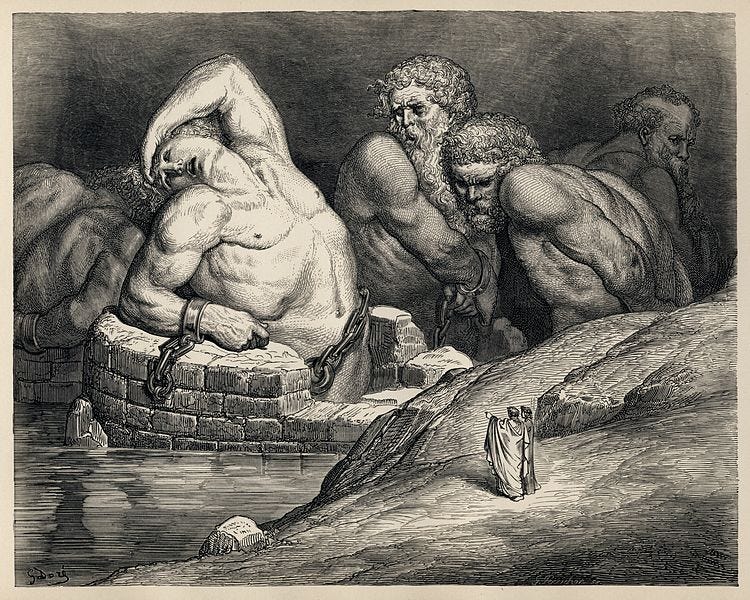
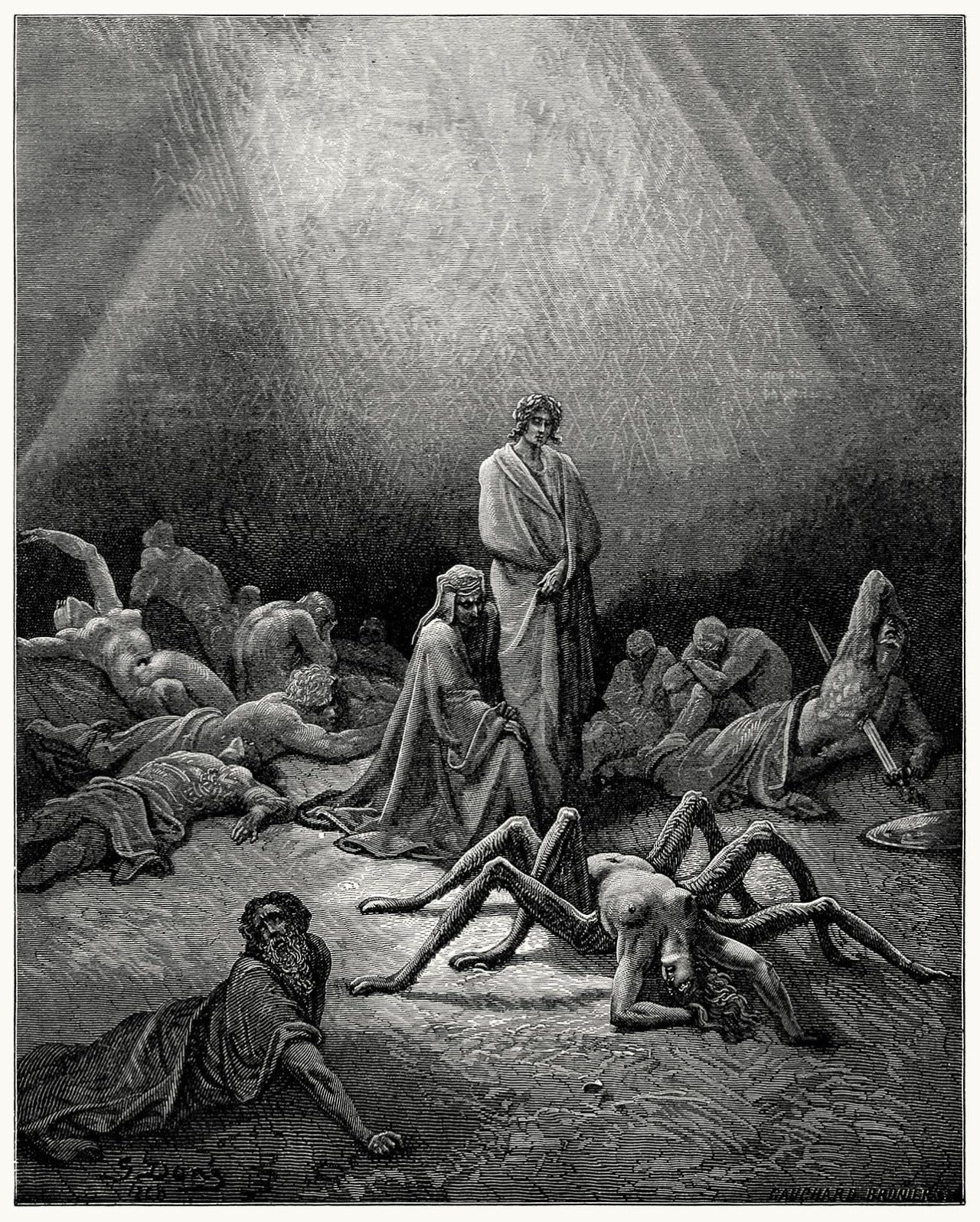
Tartarus is known as a pit of hell as deep below the Earth as the the sky is above. More specifically, Tartarus is a pit where the Universe’s oldest beings or Titans were bound for their eternal punishment. A famous Greek poet once said it would take 9 days for an anvil to reach Tartarus if dropped from Earth. Interesting when you think of how many 9’s there are associated with hell.
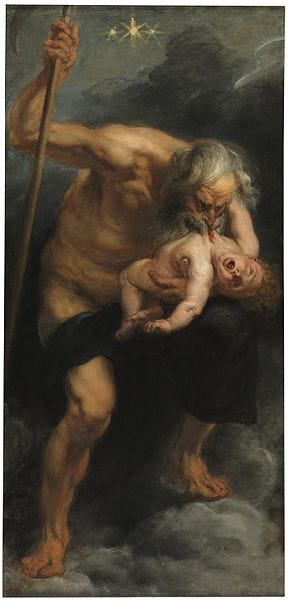
The story goes: Some time ago, the Sky deity (Ouranos) was supreme being of the universe. He was wreaking havoc on all other forms of life, punishing anyone he saw as a potential threat. He searched the universe for the deepest dungeon he could find to keep his enemys imprisoned for eternity, even sending his own children there in fear they could overpower their father. This pit would be known as Tartarus. Eventually Ouranos’ own child and the King of the Titans (Cronus) castrates his father with a sickle and is crowned as new overlord of the Universe and the official warden of Tartarus. Cronus in Roman myth is also known as Saturn. However, when Cronus had kids it became prophecy that he would be killed by his own kin just as he had done to his father. This led Cronus into a paranoid spiral. When his first set of bastards were spawned, the Titan King swallowed his children. But when his son Zeus was born, he was protected by his mother Earth (Gaia) in a cave. This would ultimately seal the fate of Cronus. Zeus grew up and decided to free his siblings by killing the dragon his father hired to guard Tartarus and then tricking his father to drink a potion which forced him to throw the sibling-Gods up. The siblings escape with Zeus and then begin to draw out their battle plans as they plan a war against the Titans. This war would be called the Titanomachy.
Over history the story of Tartarus has been altered to match the culture of the time but you will be familiar with this tale because symbolically, it is embedded in many cultural stories today. The Romans would alter the myth to make Tartarus the pit where sinners are sent into hell and were more specific about the geography of the place and the kinds of punishment handed out. And so the process of gentrification begins…
Odly enough there is a Jewish text which references Tartarus. In the apocryphal book of Enoch, Tartarus is mentioned again as a pit of hell which was watched over by the angel Uriel. In the story, God sets Uriel in charge of the world and Tartarus. There is even a reference to Tartarus in the New Testament in the Bible. It isn’t specifically stated but there is a mention of the older Greek form of the word. There are other storys which contain many of the same elements (kinda sounds like a Marvel comic-series)
2. Bards
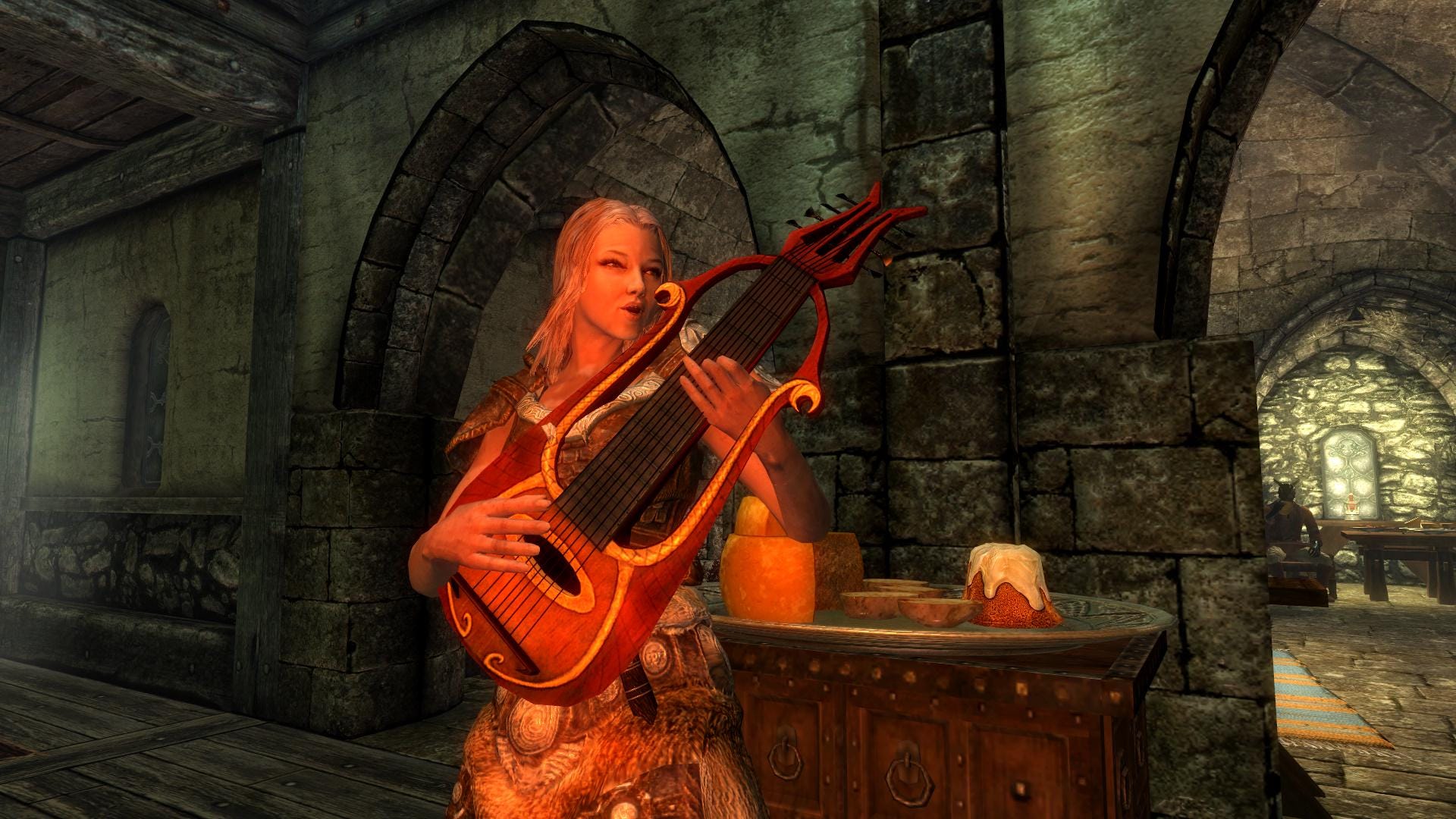
You walk into a bar after working a solid 9. You have a friendly interaction with the bartender which leaves you with a smile even as they turn their back. As you wait for the drink you look around to see the local band playing a cover of an old song from the 80’s about some hometown hero who lived his life with his foot heavy on the pedal. The music fills your chest and once mixed with the cold brew behind the bar, the lyrics of the songs fill your heart and people around become animated and dance to tunes they will later sing in the car on the way to work.
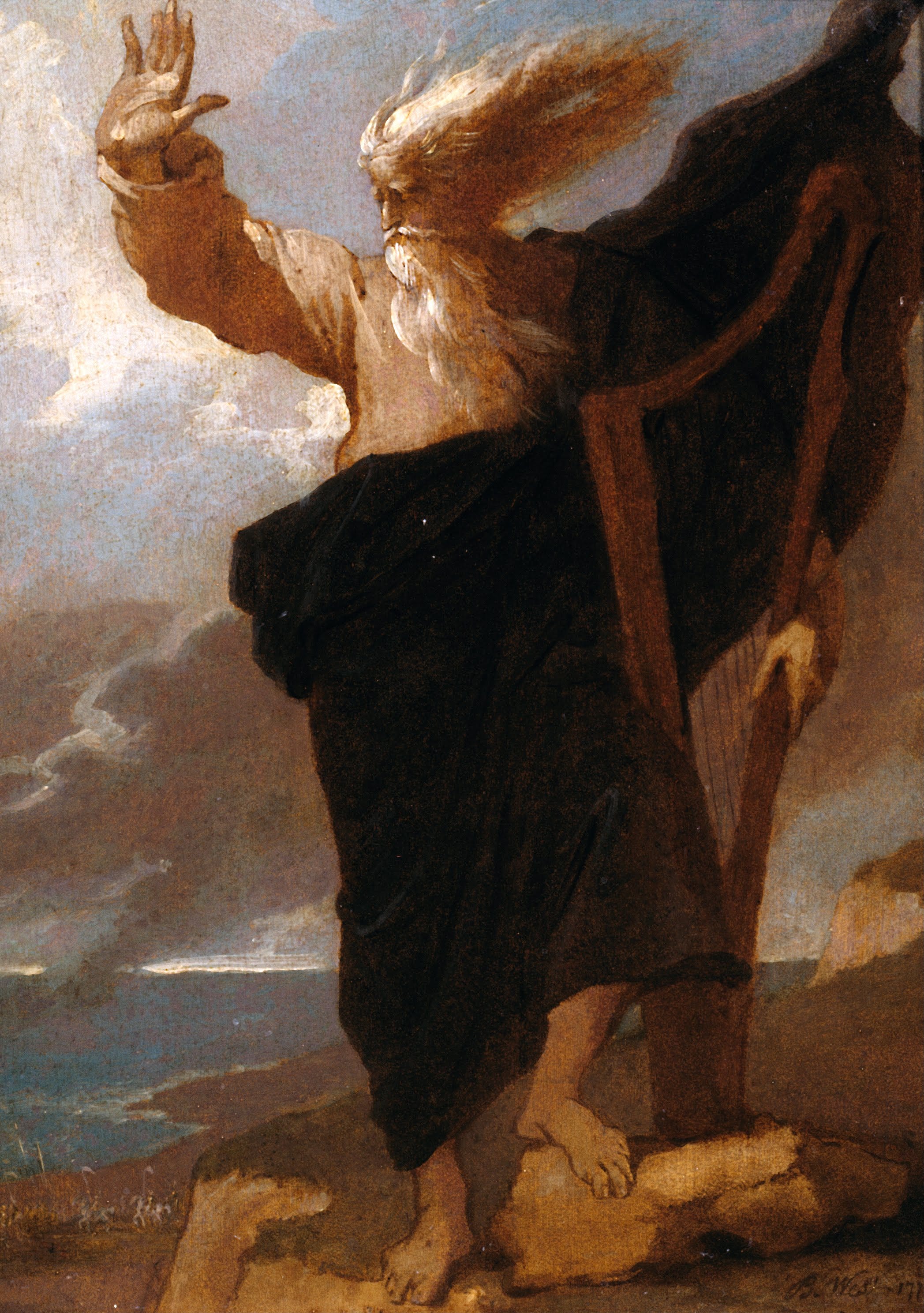
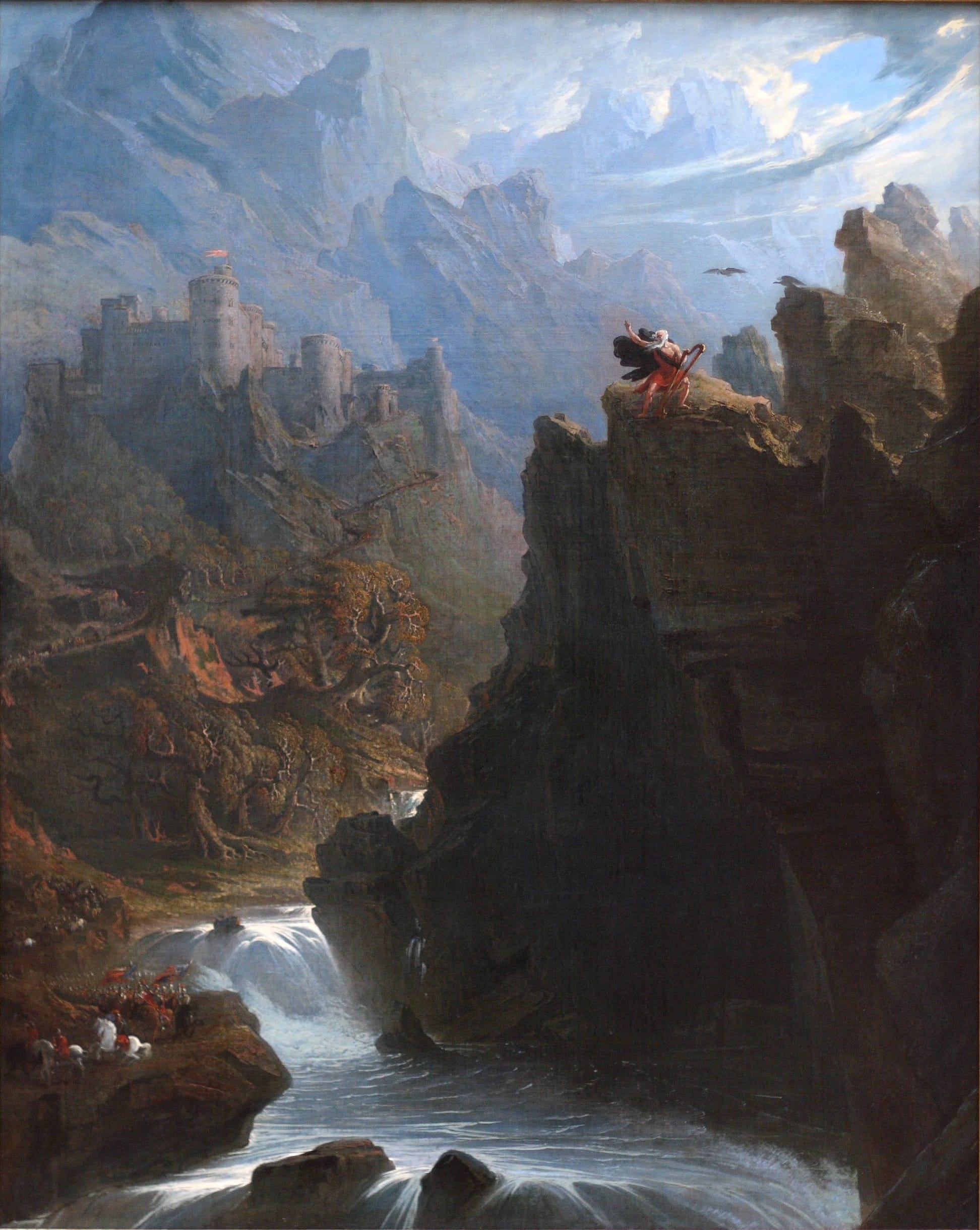
This kind of coming-of-age past-time has existed since ancient times. Music has always played a significant role in societies. So much so that it is known kings would have an employed artisan in his court to sing songs which praised the royal family and ancestors. This artisan was a bard. The artist would sing songs of ancient battles that were fought by the town’s forebears and how the town came to be for example. Hilariously, if the royals chose to not pay this bard then he or she would go around the town trashing whomever their employer was. Since it was usually the rich families who could afford to hire a bard, the whole town would find it especially amusing to hear these satires. Imagine seeing a man walk down the street, sometimes playing an instrument and singing funny songs making fun of the rich kid in town nobody likes
.
The demand for bards was so high, colleges began to open specializing in oral stories. The actual Bardic system ended in Wales in the 13th century but it has origins dating back to the 5th century A.D. coming from a Gaelic word (Irish) As a lover of poetry I know a lot of the most renowned writers have been Irish. The Bardic system has been revived several times in English culture but the structured college system has mostly vanished. However as a Mexican-American, I know the practice of rich people hiring musicians to create folk songs about their employers is very much alive and thriving.
Recently, theres a new genre generated with the abilities of ai called bardcore. People have started to turn modern hits into bardic-sounding songs where it sounds like you’re listening to a The Weeknd song in a tavern from the Harry Potter universe. If you’d like to give a listen to a sample you can click HERE.